
Many women wonder whether boxing is right for them, especially if they have never stepped into a gym or put on gloves. Boxing for women beginners can be an effective way to improve fitness, build strength, develop coordination and learn practical movement skills. With supportive coaching and consistent practice, beginners can gradually build confidence while enjoying a workout that combines technique, movement and conditioning.
Women’s Boxing Benefits: What the Training Offers
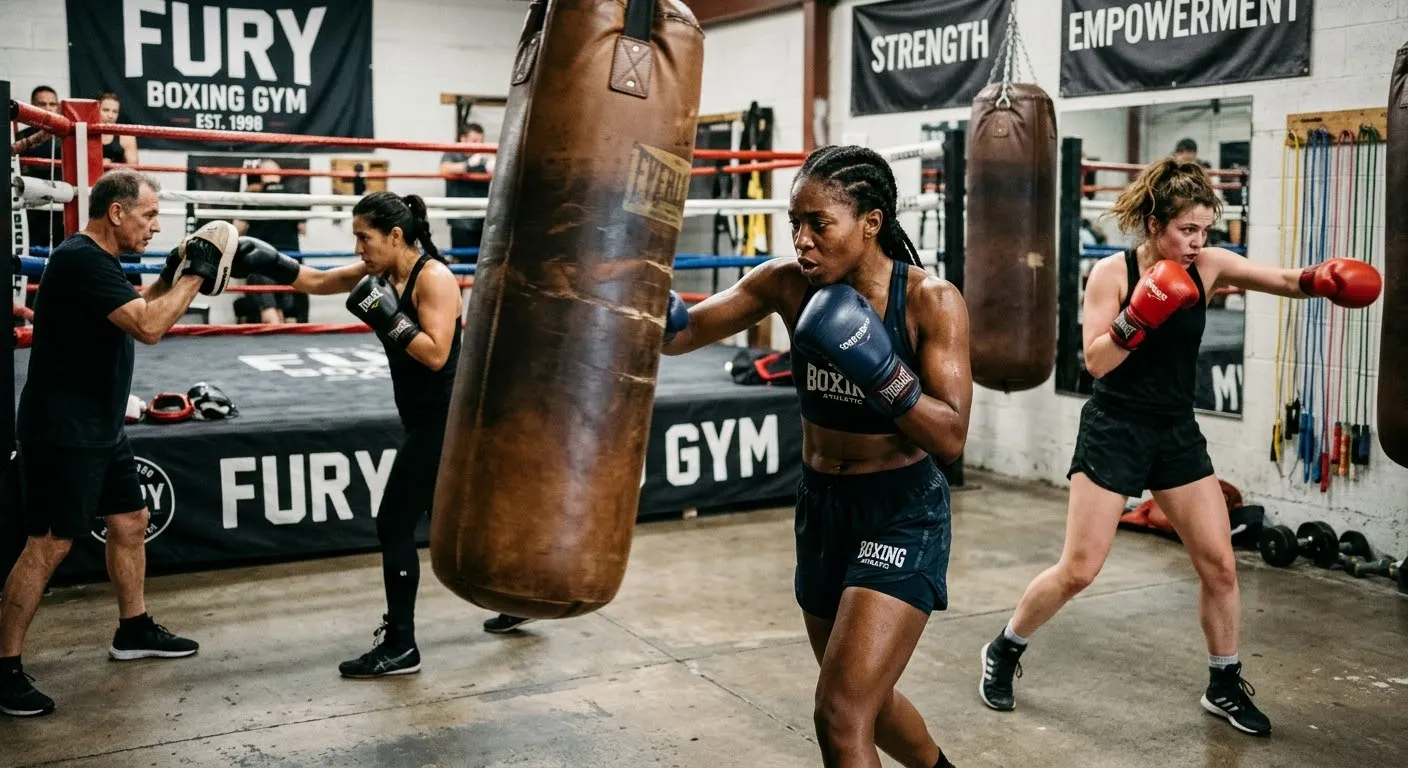
Boxing combines movement, coordination, technique and physical conditioning. Instead of repeating the same exercise throughout a session, participants practise different skills and gradually improve their control.
Potential women’s boxing benefits include:
- Improved cardiovascular fitness and endurance
- Better balance, coordination and body awareness
- Increased muscular endurance in the shoulders, arms, core and legs
- A structured way to manage everyday stress
- Confidence gained through learning a new skill
These benefits are not guaranteed and depend on training frequency, intensity and recovery. Boxing also does not automatically lead to weight loss or replace every form of strength training.
The following table shows how common training activities may help beginners develop different skills.
| Training activity | Potential benefit | Beginner focus |
|---|---|---|
| Footwork and stance | Balance and coordination | Maintaining control while moving |
| Shadowboxing | Technique and rhythm | Practising punches correctly |
| Bag or pad work | Timing and conditioning | Following the coach’s instructions |
| Conditioning exercises | Cardiovascular fitness | Working at a manageable pace |
| Defensive drills | Movement and awareness | Learning basic reactions |
The goal is to develop these skills gradually rather than master everything in one session.
Strength, Fitness and Stress Management
A typical boxing session may include a warm-up, footwork drills, shadowboxing, bag work, pad exercises and conditioning. The exact format depends on the gym, coach and class level.
For boxing for women beginners, this variety can make exercise more engaging because participants are learning a skill while staying active. Regular practice may improve cardiovascular endurance and coordination, while gradually helping participants maintain effort for longer periods.
Boxing also involves several muscle groups. The shoulders and arms contribute to punching, the core helps maintain balance and transfer force, and the legs support movement and stability. Women who want broader strength development may also benefit from resistance training alongside boxing.
Some people find that concentrating on punches, footwork and combinations helps them take a break from everyday distractions. Physical activity can support general wellbeing, although individual experiences vary and boxing is not a guaranteed treatment for mental health conditions.
Beginners do not need to train at maximum intensity. Learning proper technique, taking breaks when needed and increasing the workload gradually can make training more manageable.
Women’s Self Defence: Realistic Expectations
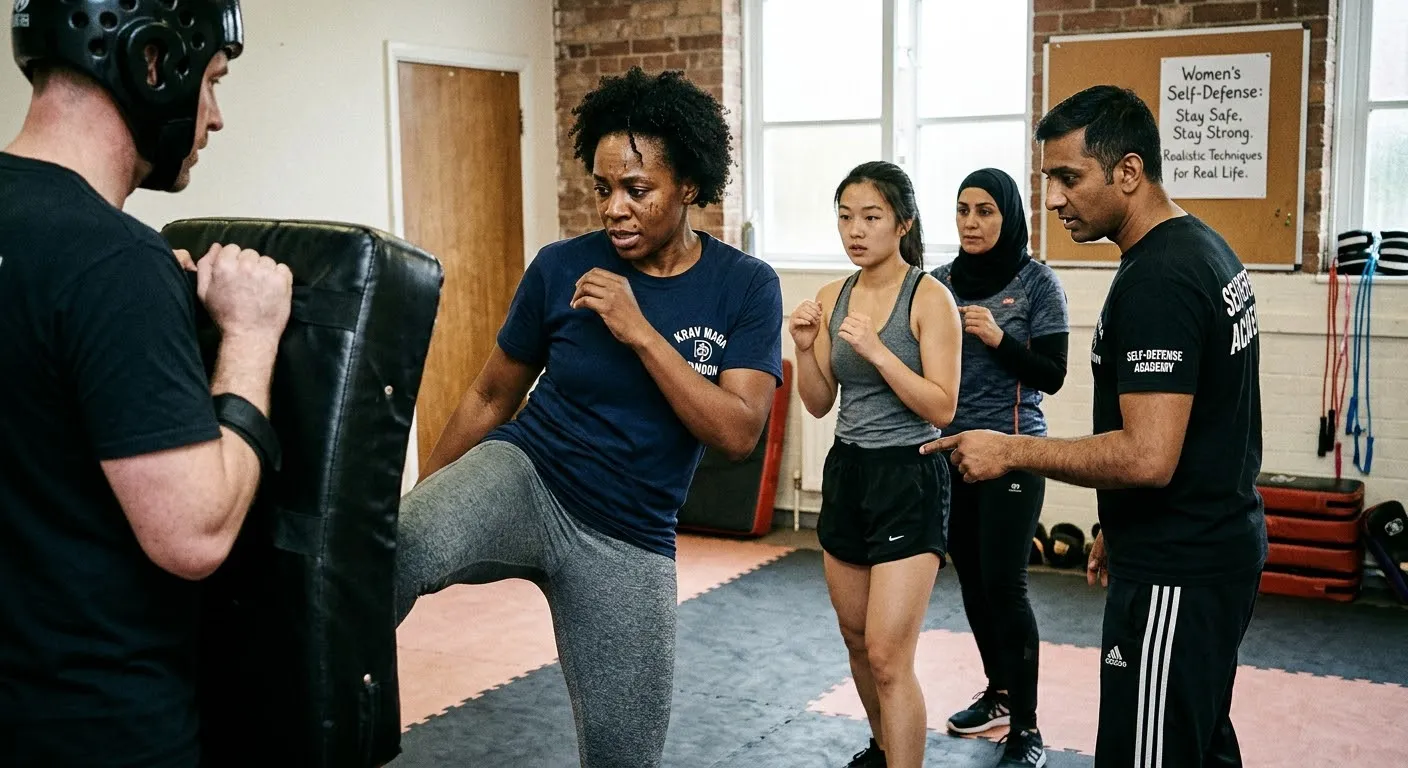
Boxing can introduce useful movement skills that may contribute to personal safety. Participants practise controlling distance, moving their feet, maintaining balance and responding to another person’s movements. They may also develop familiarity with defensive positioning and controlled reactions.
However, boxing is not a complete self-defence programme. A standard class may not cover verbal de-escalation, escape planning, boundary-setting or recognising potentially unsafe situations.
Effective personal safety involves more than physical techniques. Avoiding danger when possible, creating distance, seeking help and leaving an unsafe situation may be more important than engaging in a confrontation. No sport can guarantee personal safety.
Women interested in self-defence should ask what a class actually teaches. A boxing class generally focuses on boxing skills, fitness and controlled practice, while a dedicated self-defence course may cover additional scenarios and strategies.
Why Choose Women-Only Boxing Classes?
Some women feel more comfortable learning in a women-only environment, particularly when they are new to exercise or unfamiliar with boxing. Training alongside other women may make the experience feel more approachable.
However, women-only classes are not automatically better than mixed classes. Coaching quality, clear instructions, respectful behaviour and a suitable training level matter more than the class format alone.
At Cheriki Boxing Academy, women can explore dedicated women’s boxing classes. Before publishing this detail, confirm with the academy that the current schedule and class format match this description. Beginners should also check which sessions suit their experience level and whether equipment is provided.
A supportive class should allow participants to ask questions, practise at an appropriate pace and receive clear guidance. If you are comparing options, look for a training environment where you feel comfortable learning the fundamentals.
You can explore the academy’s women’s boxing classes to learn more about its women-focused training options.
What to Expect at Your First Women’s Boxing Class
You do not need previous boxing experience to attend a beginner-friendly session. The coach should explain the activities and demonstrate the basic movements. A first class may include the following steps, although the exact format varies.
- Welcome and orientation: The coach explains the class format and answers initial questions.
- Warm-up: Light movement and mobility exercises prepare the body for activity.
- Stance and footwork: Beginners practise standing correctly, moving and maintaining balance.
- Basic punches: The coach introduces simple punches and demonstrates proper technique.
- Practice and conditioning: Depending on the session, participants may try shadowboxing, bag work, pad drills or fitness exercises.
- Cool-down and questions: The session may finish with lighter movement and an opportunity to ask questions.
Ask the academy what the first session involves, whether gloves are provided and what you should bring. Comfortable workout clothes and water are sensible starting points.
Tell the coach that you are new and ask for clarification whenever necessary. If you have an injury or physical limitation that could affect your participation, discuss it with the coach before training.
Your first session is an opportunity to become familiar with the environment and learn the basics, not to match the performance of experienced boxers.
How to Get Started with Boxing for Women Beginners
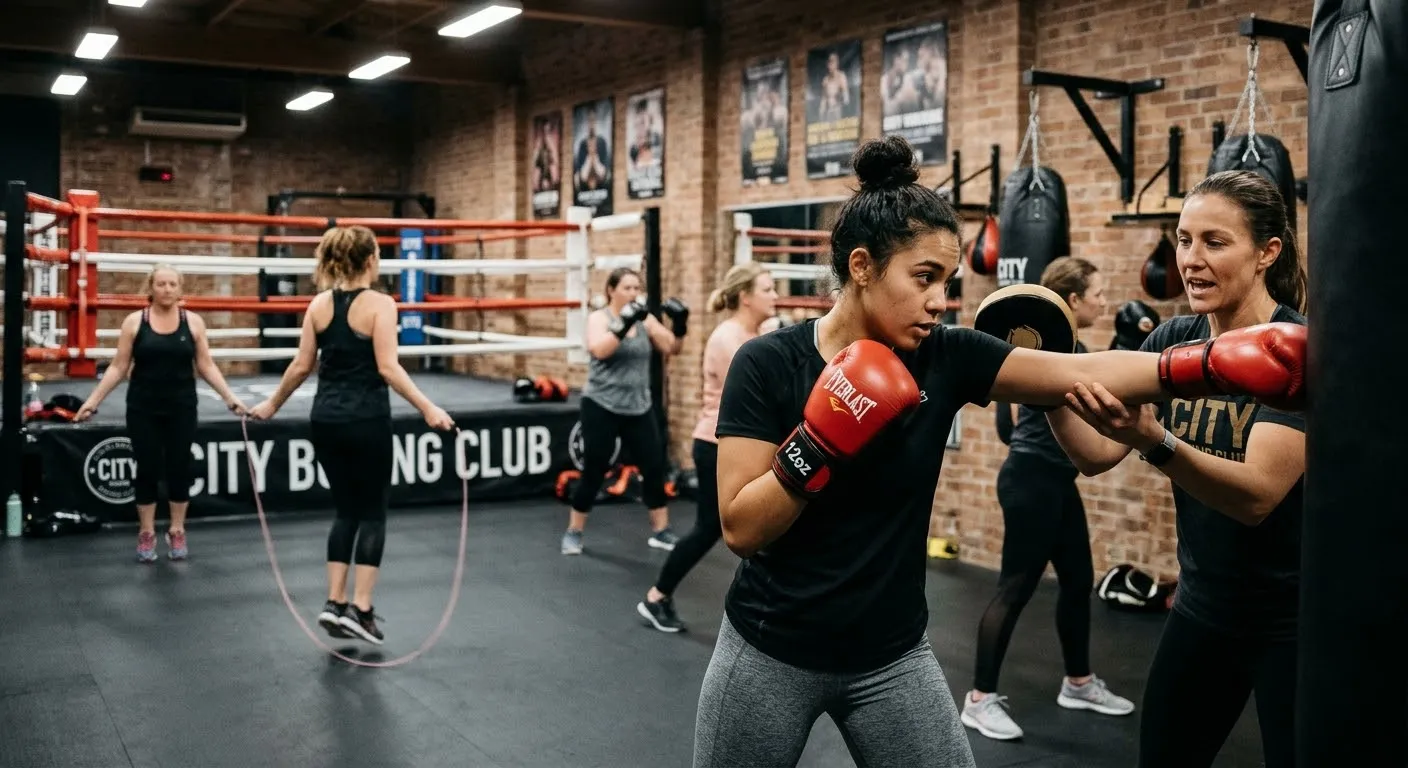
Choosing a suitable class is a practical first step. Look for a programme that welcomes beginners and offers clear instruction. Ask whether the sessions focus on technique, fitness, sparring or a combination so you know what to expect.
Before attending, consider these points:
- Explain your experience level: Let the coach know if you have never boxed before.
- Ask about intensity: Find out whether you can work at a manageable pace.
- Check equipment requirements: Ask whether gloves and other equipment are provided.
- Set a realistic goal: Focus on learning the basics and attending consistently.
With boxing for women beginners, steady progress is more useful than trying to do too much in the first few sessions. You can gradually build familiarity with the movements, improve your fitness and decide whether the class suits your goals.
If you want to explore a women-only option, you can try a women-only class by requesting a trial through the academy’s free-trial process. Ask the team about available sessions and confirm which option is suitable for new participants.
Conclusion: Is Boxing a Good Choice for Women?
Boxing can offer women an engaging way to improve fitness, coordination, muscular endurance and confidence while learning a practical sport. It may also introduce movement skills relevant to personal safety, although it should not be confused with a complete self-defence programme.
The best starting point is a class with clear coaching, realistic expectations and an environment where beginners can learn without unnecessary pressure. You do not need to know the basics before attending; learning them is part of the process.
Cheriki Boxing Academy offers women-only options for women interested in boxing. You can book a free trial and see whether the atmosphere, class format and coaching style feel like a good fit.
Frequently Asked Questions About Women’s Boxing
Is boxing good for women beginners?
Yes. Boxing can suit women who are new to exercise or martial arts when the class provides clear instruction and appropriate progressions. Beginners should focus on technique rather than trying to match experienced participants.
What are the main women’s boxing benefits?
Potential benefits include improved cardiovascular fitness, coordination, balance, muscular endurance and confidence gained through learning a new skill. Results depend on consistency, intensity and recovery.
Can boxing help women learn self-defence?
Boxing teaches movement, distance management and defensive positioning that may be useful in some situations. However, it does not cover every aspect of self-defence or guarantee personal safety.
Do women need to be fit before starting boxing?
Not necessarily. Many beginner-friendly classes introduce the basics gradually. Check with the coach to confirm that the session suits your current fitness level.
Are women-only boxing classes suitable for beginners?
They can be, provided the class accepts beginners and offers suitable instruction. Check the class format and experience requirements before attending.
What should I expect in my first boxing class?
You may practise a warm-up, stance, footwork and basic punches, followed by drills or conditioning. The exact structure depends on the coach and programme.

From First Class to the National Stage: The Cheriki Pathway
Every competitive boxer starts somewhere, and the journey toward becoming one of the Cheriki boxing champions begins with learning the fundamentals. For some athletes, that
Can You Start Boxing at 40? A Beginner’s Guide for Adults Over 30, 40 & 50
Many adults wonder whether it is too late to learn a new sport once they reach their thirties, forties or fifties. The question comes up
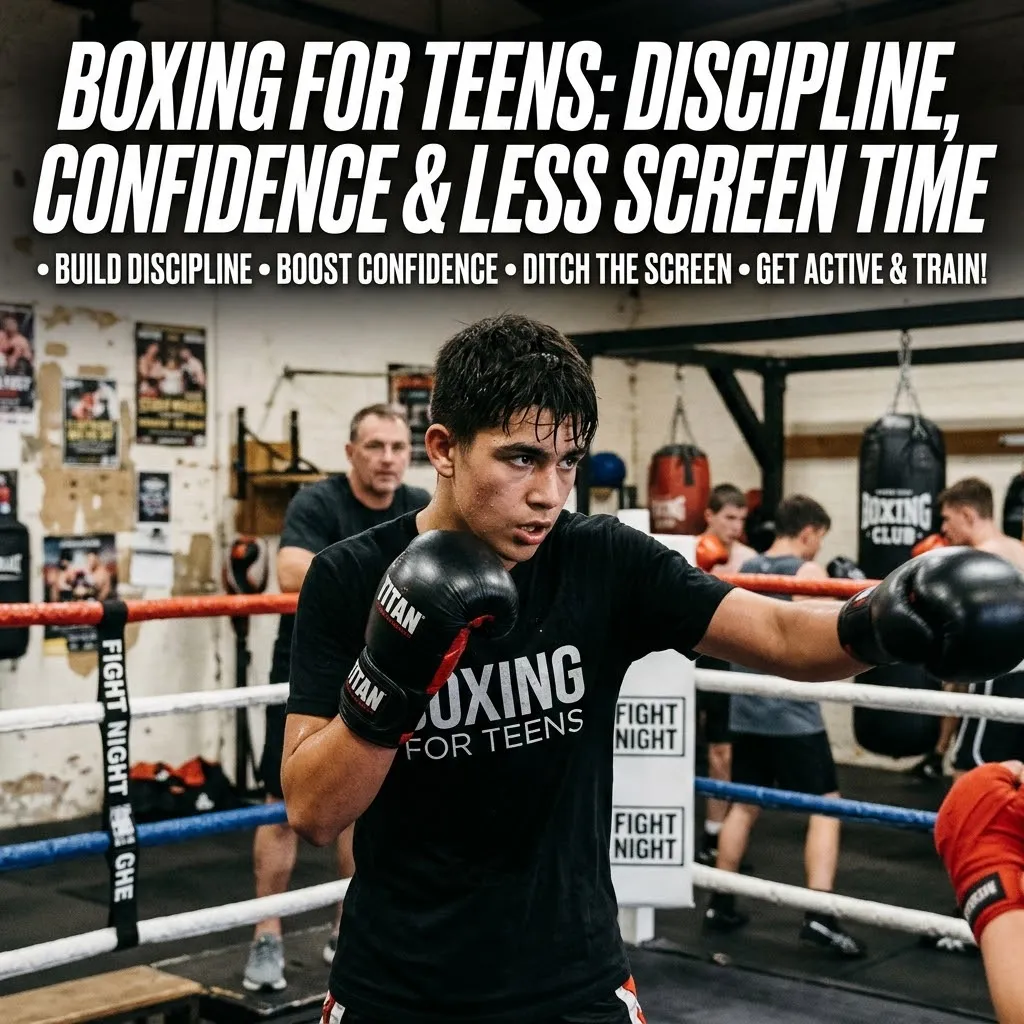
Boxing for Teens: Discipline, Confidence & Less Screen Time
Many parents notice that teenagers can struggle with focus, motivation and the constant pull of phones and screens. Structured physical activity can offer a practical