
This article explains the main safety considerations, age-related factors, differences between technical work and sparring, protective equipment limits, and practical questions parents can ask. The goal is to help families make an informed decision rather than to promote any single activity.
Is Boxing Safe for Kids?
Physical activity that builds coordination, strength, and discipline can benefit children. Boxing training that focuses on footwork, shadow boxing, and bag work without intentional head contact falls into this category for many participants.
Competitive boxing or any format that rewards deliberate blows to the head and face carries different risks. Medical organizations have long noted that boxing encourages intentional head strikes. Concussions and facial injuries occur in the sport. Children’s developing brains can be more vulnerable, and recovery from concussion may take longer than in adults.
The American Academy of Pediatrics and the Canadian Paediatric Society issued a joint position statement opposing boxing as a sport for children and adolescents because of these risks. That 2011 policy statement was later reaffirmed and then retired in March 2025. The underlying concerns about intentional head impacts remain relevant for any program that includes sparring or competition. Parents should therefore distinguish clearly between non-contact skill practice and contact training.
No sport is completely free of injury risk. The key difference with boxing is that scoring and success often depend on landing clean punches to the head and body. Programs that remove or strictly limit head contact reduce that particular risk, though other injuries, such as sprains and hand or wrist issues, can still occur.
What Age Can Kids Start Boxing?
There is no single universal age that answers “what age can kids start boxing.” Suitable starting points vary with the type of training offered.
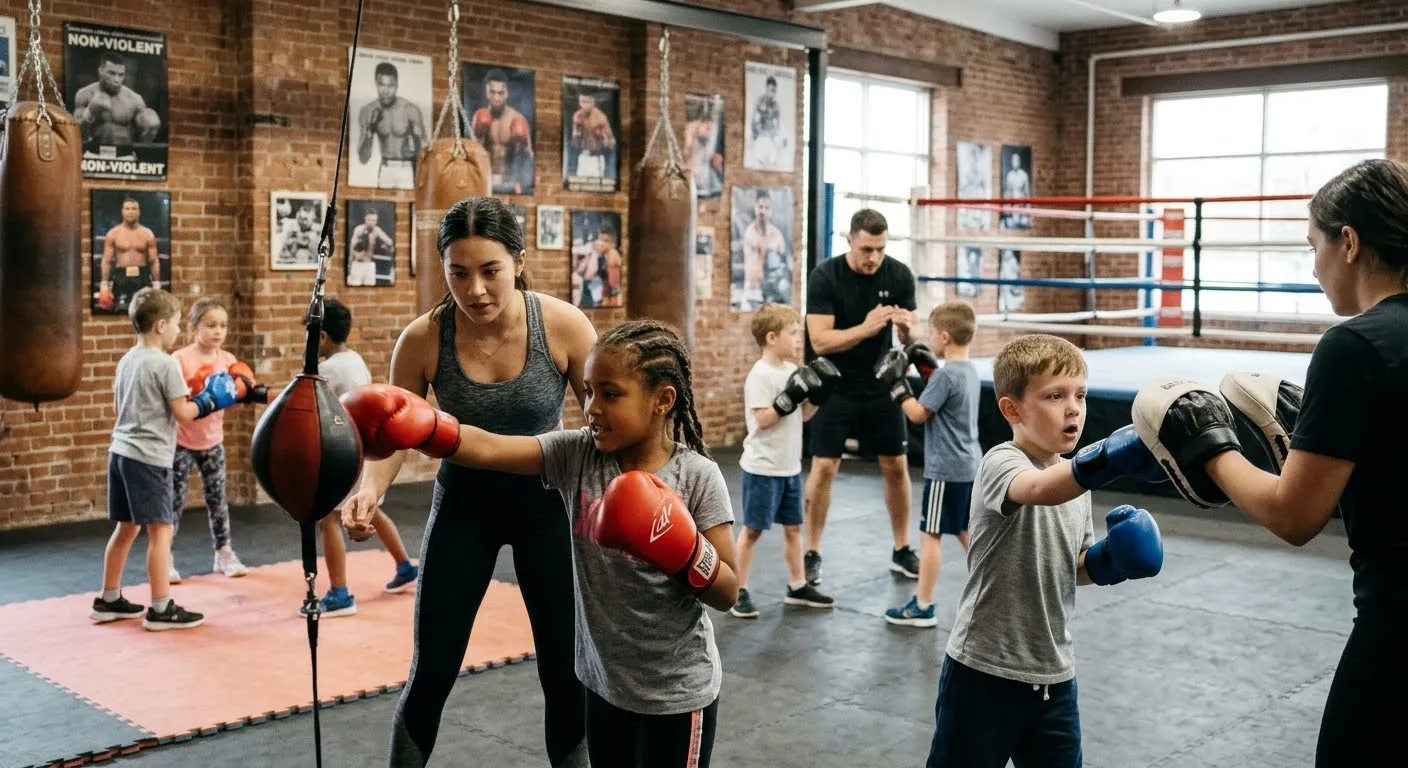
Many gyms introduce basic stance, movement, and punching technique to younger children through non-contact drills and bag work. Developmental readiness—attention span, ability to follow instructions, and physical coordination—matters more than a calendar age alone.Parents exploring kids boxing classes should look for age-appropriate, non-contact training that helps children develop coordination, follow instructions, and learn basic boxing skills at a suitable pace. Competitive sparring or full-contact bouts are typically restricted to older age groups under governing-body rules.
The following table summarizes the main differences parents should consider when exploring boxing programs for children.
| Type of training | What children may practice | Main safety consideration |
|---|---|---|
| Non-contact technique | Stance, footwork, shadow boxing, and basic punches | Correct technique, suitable exercises, and coach supervision |
| Bag and pad work | Punching a heavy bag or focus pads | Properly fitted gloves, hand wraps, and age-appropriate intensity |
| Partner drills | Practicing selected movements with another participant | Clear boundaries, close supervision, and rules about physical contact |
| Sparring or competition | Practicing against an opponent, potentially with head contact | Greater concern about head and facial injuries; parents should understand the risks and applicable rules |
Parents should confirm the exact age ranges and contact policies of any specific program. National or provincial boxing organizations often set minimum ages for sanctioned competition that differ from recreational classes. Always ask the academy directly rather than relying on general statements.
Parents considering teen boxing classes should also ask how training changes with age, experience, physical development, and readiness for contact activities.
Boxing Safety and Protective Equipment for KidsKids Boxing Safety: Essential Protective Equipment
Proper gear reduces certain risks but does not eliminate them. Common items include:
- Hand wraps to support wrists and knuckles
- Appropriately sized boxing gloves
- Mouthguards to protect teeth and reduce some oral injuries
- Headgear in some amateur formats
Equipment must fit the child’s size and the type of training. Ill-fitting gloves or poorly maintained gear can increase rather than decrease injury risk. Headgear may lessen cuts and some facial trauma, yet studies and medical statements have noted limited evidence that it reliably prevents concussions. Protective equipment is one layer of risk management, not a guarantee of safety.
Parents should check that gear is in good condition, correctly sized, and required according to the class rules.
Protective Gear and Kids Boxing Safety
When parents ask, is boxing safe for kids, protective equipment is an important part of the answer. Properly fitted gloves, hand wraps, and other recommended safety gear can help reduce certain training risks. However, equipment alone cannot guarantee safety without appropriate supervision and age-appropriate activities.
Do Kids Have to Spar in Boxing Classes?Do Kids Have to Spar in Boxing Classes? What Parents Should Know
Learning boxing skills does not require sparring. Shadow boxing, pad work, heavy-bag training, footwork drills, and conditioning can teach technique, improve fitness, and build discipline without partner contact.
Some programs introduce light, controlled contact only after a child demonstrates solid fundamentals and under close coach supervision. Other classes remain non-contact by design. Parents need clear information about the actual policy of the specific class their child would join. Assume nothing; ask directly whether any form of sparring or head contact is part of the curriculum and at what stage it might begin.
Sparring is neither necessary for learning the sport nor appropriate for every child.
Is Boxing Safe for Kids Without Sparring?
For parents wondering, is boxing safe for kids, it is worth asking the gym whether sparring is optional and how contact activities are supervised. Children can practise technique, coordination, and footwork through non-contact drills without needing to participate in sparring.
How Important Is the Boxing Coach?
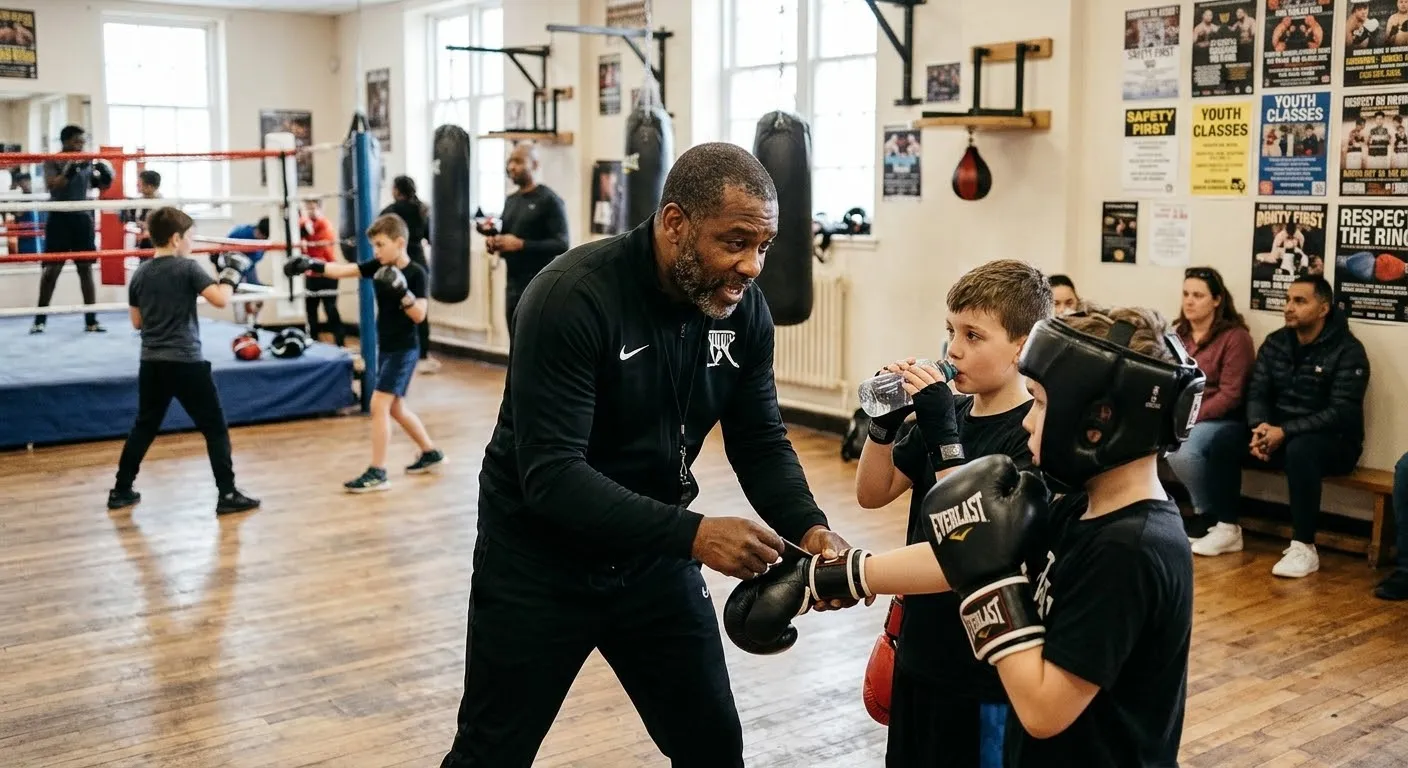
The coach strongly influences safety and learning quality. Look for instructors who:
- Adapt sessions to the child’s age and skill level
- Provide active, continuous supervision
- Enforce clear rules about contact and intensity
- Check equipment and the training space
- Watch for signs of fatigue, discomfort, or possible injury
- Communicate openly with parents
- Know basic concussion recognition and have a plan for medical evaluation when needed
Credentials, experience with youth athletes, and a demonstrated focus on progressive skill development are more useful indicators than marketing claims. Observe a class if possible and speak with the coach about how they handle contact, rest, and individual differences.
What Progress Can Kids Make in Three Months?Kids Boxing Classes: What Progress Can Children Make in 3 Months?
Results vary widely. With consistent attendance, a child may improve basic coordination, learn fundamental punches and defensive movements, develop better balance, and increase overall fitness. Following instructions and building training habits are also common early gains.
Progress depends on starting fitness, age, frequency of training, coaching quality, and individual factors. Three months is not a guarantee of any specific skill level or confidence boost. Avoid programs that promise rapid competitive readiness or dramatic psychological changes.
Questions Parents Should Ask Before EnrollingChoosing Kids Boxing Classes: Questions Every Parent Should Ask
Before registering, parents can follow these steps to evaluate whether a program fits their child’s needs:
- Ask whether the class includes physical contact, sparring, or punches to the head.
- Find out how coaches adapt training to different ages and experience levels.
- Confirm which protective equipment is required and whether families need to provide it.
- Ask what happens if a child shows signs of a possible concussion or another injury.
- Find out whether parents can observe a class or arrange a trial session before enrolling.
Parents can also book a free trial at Cheriki Academy to explore the training environment, learn about the coaching approach, and determine whether the program is a suitable fit for their child.
Honest, specific answers help families decide whether the program matches their comfort level and the child’s needs.
Is Boxing the Right Activity for Your Child?
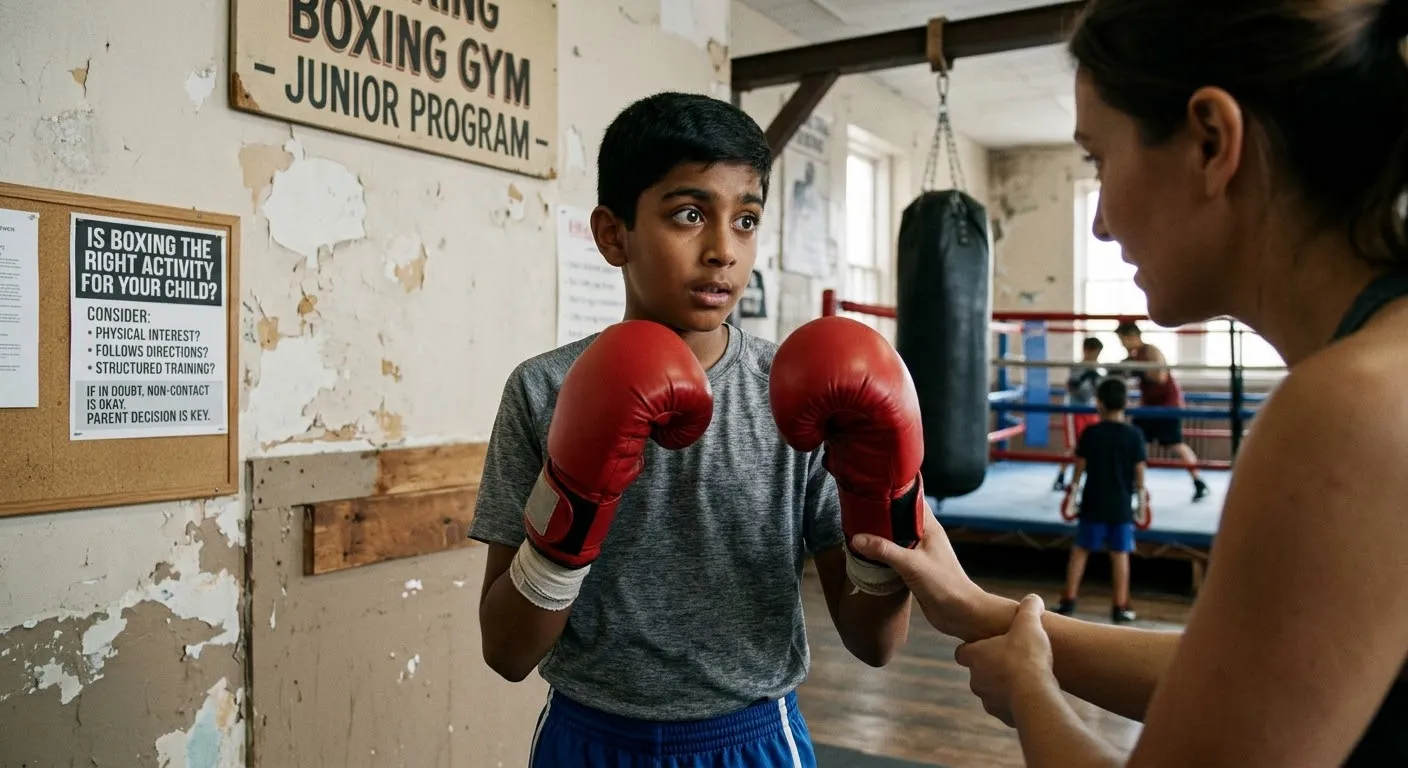
Consider the child’s interest in physical activity, ability to follow directions, and comfort with structured training. Interest in movement does not automatically mean readiness for contact. If concerns about intentional head impacts remain high, non-contact fitness or other sports that do not center on head blows may be better options.
Any child with a history of concussion, neurological issues, or other medical conditions should receive clearance from a qualified healthcare provider before starting. The decision ultimately belongs to the parents after gathering accurate information about the specific program.
How to Choose Safe Boxing Classes for Kids
Ultimately, deciding whether boxing is suitable for a child means looking beyond age alone. Parents asking is boxing safe for kids should consider the coaching standards, training environment, safety rules, and their child’s comfort with the activities offered.
Frequently Asked Questions
Is boxing safe for kids who are beginners?
Non-contact technical training and bag work present lower risk of head injury than sparring. Safety still depends on coaching, equipment, and supervision.
What age can kids start boxing?
There is no single starting age. Basic non-contact skills may be introduced earlier; contact and competition usually come later under organizational rules. Confirm the program’s policy.
Do kids need to spar to learn boxing?
No. Technique, fitness, and discipline can be developed without partner contact.
Can boxing headgear prevent concussions?
Headgear may reduce some facial injuries but has limited proven ability to prevent concussion.
What should parents look for in a kids’ boxing class?
Age-appropriate instruction, clear contact rules, proper supervision, suitable equipment, and open communication with coaches.
What can a child learn in three months of boxing?
Possible gains include basic technique, coordination, fitness, and training habits. Individual results differ.
If you would like to see how classes are structured for younger athletes or experience a session, consider booking a free trial at Cheriki Academy. Confirm current details and policies directly with the academy so you can make the best choice for your child.

From First Class to the National Stage: The Cheriki Pathway
Every competitive boxer starts somewhere, and the journey toward becoming one of the Cheriki boxing champions begins with learning the fundamentals. For some athletes, that
Can You Start Boxing at 40? A Beginner’s Guide for Adults Over 30, 40 & 50
Many adults wonder whether it is too late to learn a new sport once they reach their thirties, forties or fifties. The question comes up
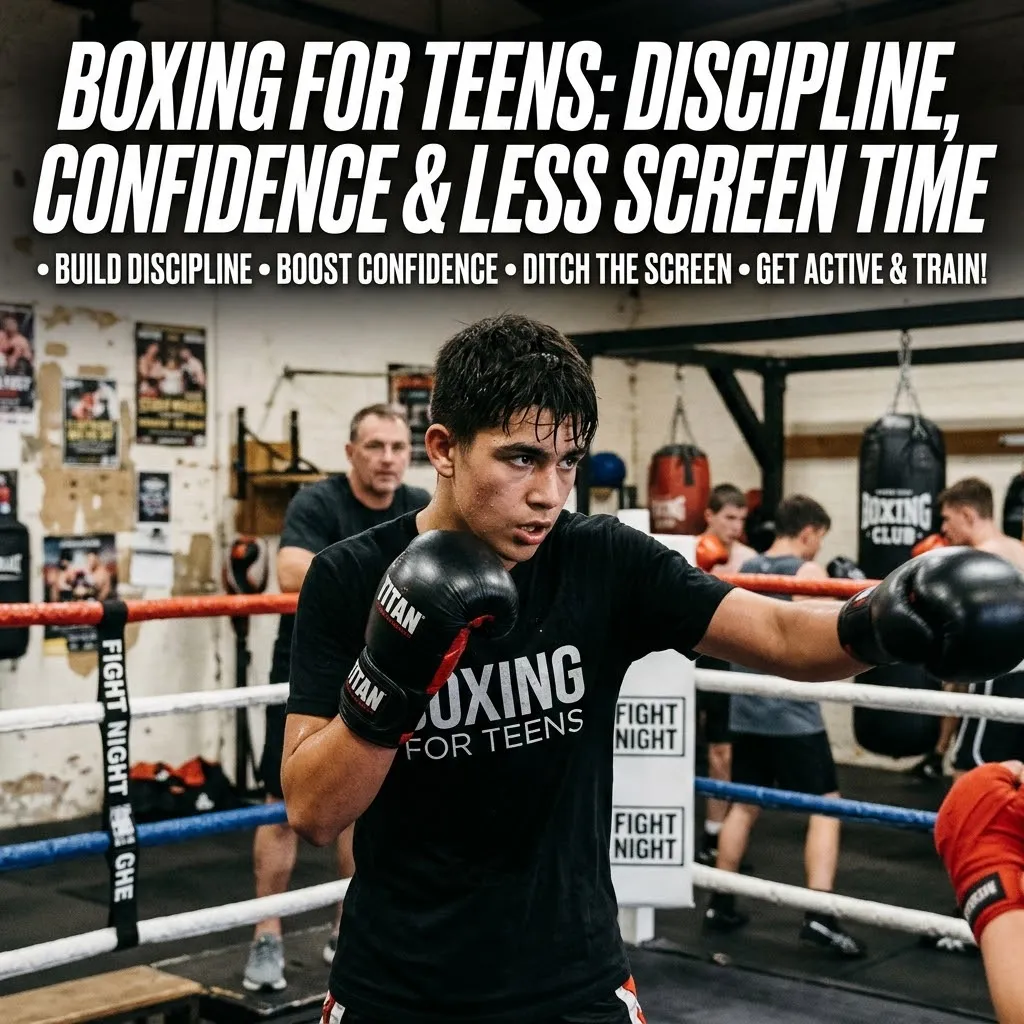
Boxing for Teens: Discipline, Confidence & Less Screen Time
Many parents notice that teenagers can struggle with focus, motivation and the constant pull of phones and screens. Structured physical activity can offer a practical