
Boxing focuses on punches, footwork, and defensive movement. Kickboxing combines punches with kicks, while Muay Thai also includes knees, elbows, and clinch techniques. Each discipline can help beginners develop coordination, endurance, balance, and confidence.
The best starting point depends on your goals, comfort level, and the training environment available to you. You do not need previous martial arts experience to begin learning the fundamentals.
Boxing vs Kickboxing vs Muay Thai: Key Differences
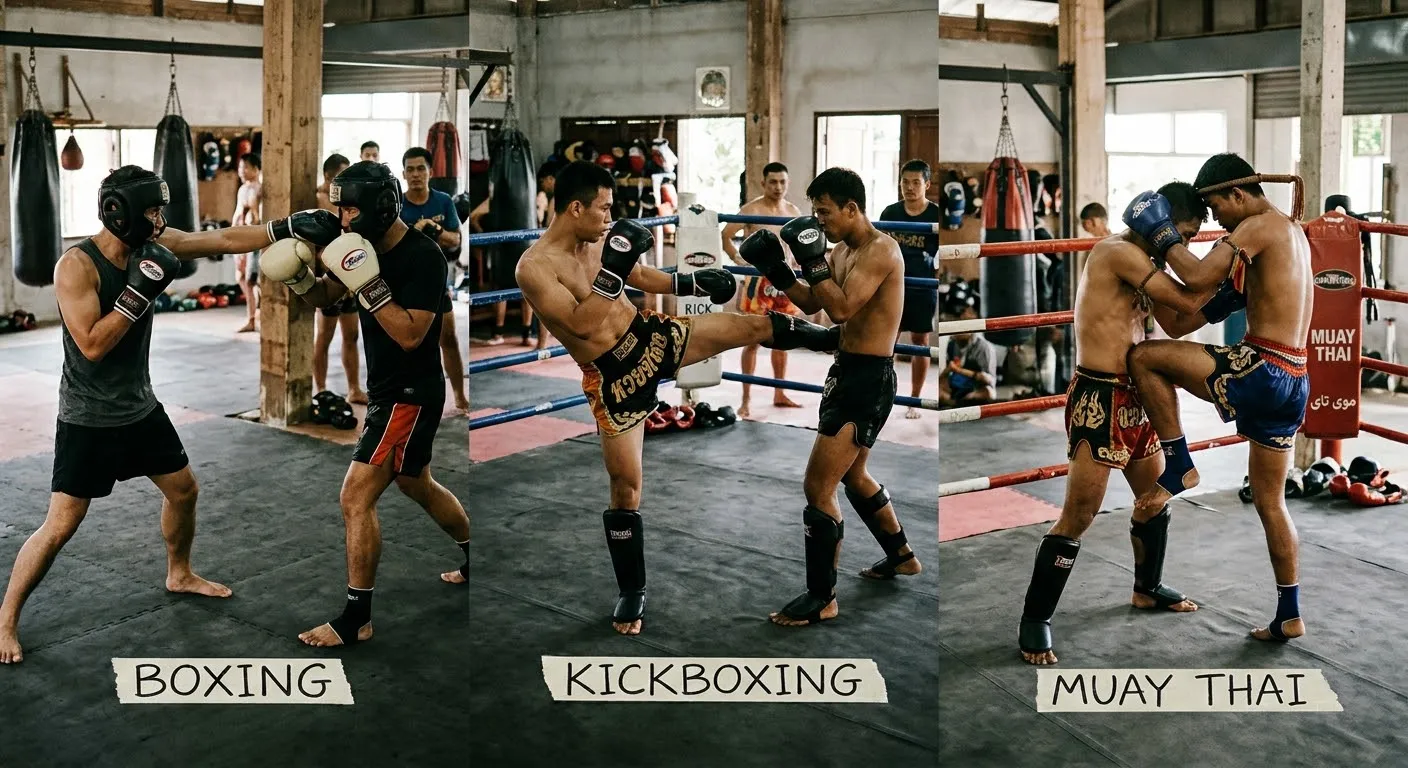
The main difference between these disciplines is the range of techniques permitted. Boxing concentrates on punches and movement, while kickboxing and Muay Thai incorporate kicks. Muay Thai also places particular emphasis on knees, elbows, and clinch work.
| Feature | Boxing | Kickboxing | Muay Thai |
|---|---|---|---|
| Main techniques | Punches | Punches and kicks | Punches, kicks, knees, and elbows |
| Footwork | Focuses on punching range and movement | Combines punching movement with kicking range | Adapts to multiple striking ranges |
| Defence | Blocking, slipping, and footwork | Punch and kick defence | Striking and clinch defence |
| Typical training | Shadowboxing, bags, pads, and movement drills | Punching and kicking combinations | Striking combinations, pads, bags, and sometimes clinch drills |
| Beginner focus | Punching technique and balance | Punching, kicking, and range control | Multiple striking techniques and positioning |
Training methods vary between gyms and coaches, so classes with the same name may not follow identical routines. The comparison above describes common features rather than a strict rule for every program.
What Skills Does Each Discipline Teach?
Boxing: Punching, Footwork, and Defence
Boxing teaches students to punch with control while maintaining balance and protecting themselves. Beginners usually practise their stance, guard, jab, cross, basic combinations, and movement.
Footwork is essential because boxers need to manage distance without relying on kicks or knees. Defensive movements, including blocking, slipping, and moving out of range, are also important parts of training.
Typical beginner activities include:
- Shadowboxing to practise movement and technique.
- Heavy-bag rounds to develop coordination and punching consistency.
- Pad work with a coach or training partner.
- Footwork drills to improve balance and positioning.
Boxing may appeal to people who enjoy refining a focused set of techniques. Repeating basic movements also helps beginners recognise their progress as their control and coordination improve.
When comparing boxing vs kickboxing vs muay thai, each discipline develops different striking skills and movement patterns.
Kickboxing: Combining Punches and Kicks
Kickboxing adds kicks to punching combinations. Students learn to coordinate their upper and lower body while maintaining balance and returning to a stable stance after each movement.
Beginners may practise basic punches, front kicks, round kicks, defensive positioning, and simple combinations. The exact techniques depend on the style of kickboxing and the coach’s approach.
Kicking requires students to manage distance and recover their balance between movements. Training may also challenge hip mobility, coordination, and lower-body endurance.
Muay Thai: A Wider Range of Strikes
Muay Thai is known for punches, kicks, knees, elbows, and clinch techniques. The clinch involves close-range positioning and control, although the amount of clinch practice varies between classes.
Beginners may start with stance, basic strikes, defensive movement, and pad drills before progressing to more complex combinations. Not every class includes every technique, and contact-intensive activities should be introduced according to the student’s readiness.
Muay Thai can appeal to people who want to learn a broader range of striking techniques. Developing control, timing, and coordination takes practice, particularly when learning to combine different movements.
Boxing vs Kickboxing vs Muay Thai for Fitness
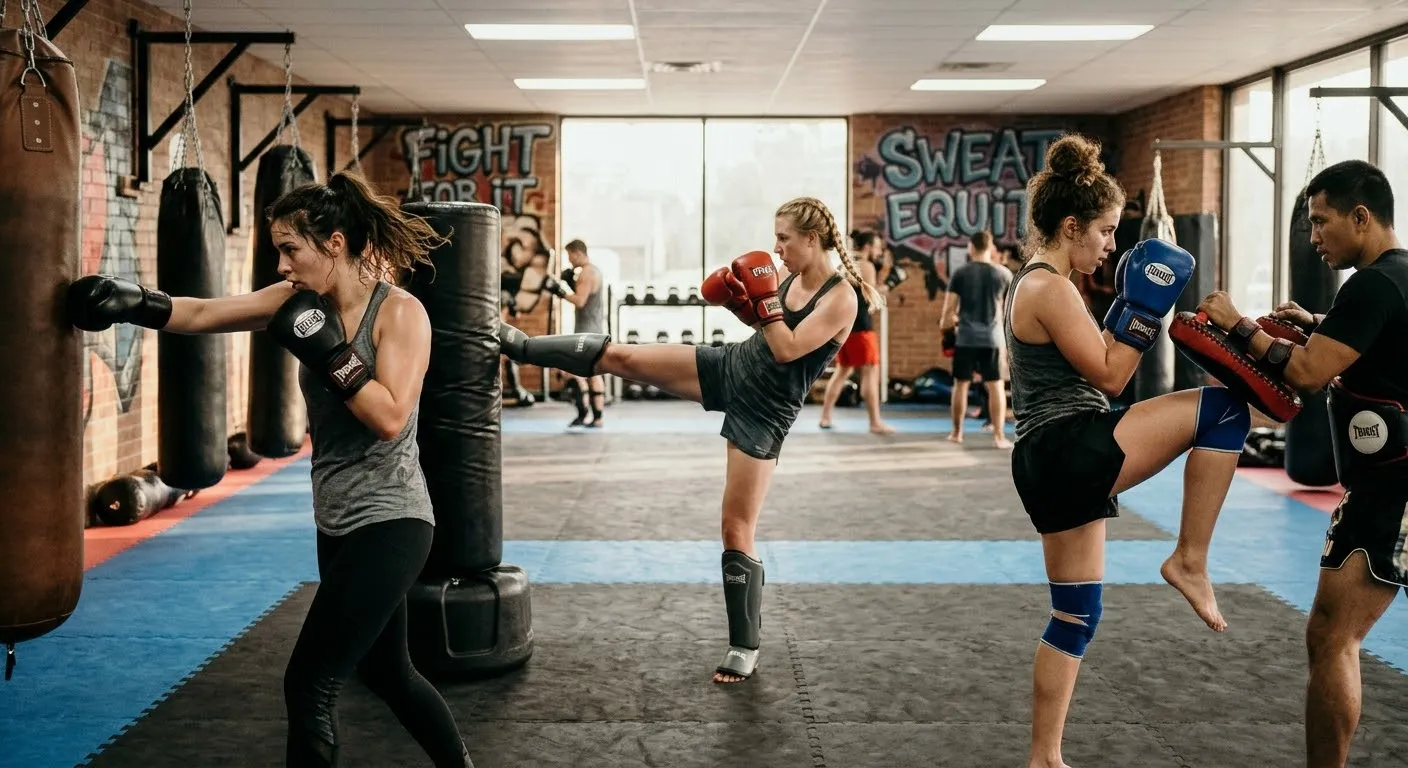
All three disciplines can provide a challenging workout. Sessions may include combinations, movement drills, bag rounds, pad work, and conditioning exercises. Overall intensity depends on the class structure, the coach, and the student’s fitness level and effort.
Boxing challenges cardiovascular endurance through repeated punching combinations and continuous footwork. Kickboxing adds kicking movements that require coordination and lower-body effort. Muay Thai may involve a wider variety of strikes and clinch drills, depending on the session.
No discipline automatically provides a harder workout than the others. A technical beginner class may be manageable, while a faster-paced session in any discipline can be demanding.
Potential fitness benefits include:
- Cardiovascular endurance: Repeated rounds challenge the heart and lungs.
- Coordination: Students practise combining movements in sequence.
- Balance: Stance changes and defensive movement require body control.
- Muscular endurance: Repeated strikes and movement challenge different muscle groups.
- Confidence: Learning new skills and seeing gradual improvement can build a sense of achievement.
For beginners comparing boxing vs kickboxing vs muay thai for exercise, consistency matters more than choosing the discipline that sounds most intense. A class you enjoy and attend regularly can be more beneficial than a demanding program that does not suit your needs.
Boxing vs Kickboxing vs Muay Thai: Contact and Safety
No striking discipline is completely free of risk. The actual risk depends on training intensity, coaching quality, protective equipment, partner behaviour, and how contact is introduced.
Understanding the differences between boxing vs kickboxing vs muay thai can help beginners ask better questions about contact and safety.
Boxing involves punching practice and may include head contact in some training environments. Kickboxing adds kicks, which require balance and distance control. Muay Thai includes additional techniques such as knees, elbows, and clinch work, although beginner classes may modify or gradually introduce them.
Learning striking techniques does not mean beginners must immediately practise against another person at full force. Many foundational skills can be developed through shadowboxing, bags, pads, and controlled partner drills.
Before joining a class, ask the coach:
- Is the class suitable for complete beginners?
- Is sparring required, optional, or introduced later?
- What protective equipment is needed?
- How are exercises adapted for different fitness levels?
Look for clear instruction, respectful training partners, sensible progression, and an emphasis on technique rather than proving toughness.
Choosing Between Boxing, Kickboxing, and Muay Thai as a Beginner
Your first class should match your goals and what feels manageable. You do not need to commit to one discipline for life before trying a beginner session.
Choosing between boxing vs kickboxing vs muay thai depends on your goals, interests, and comfort level.
Consider these factors when making your decision:
- Your main goal: If you want to focus on punches and footwork, boxing may be a good starting point. If learning kicks is important to you, consider kickboxing or Muay Thai.
- Your interest in technique: Decide whether you prefer focusing on punching fundamentals or exploring a wider range of striking movements.
- Your comfort with contact: Ask about partner drills and sparring expectations before enrolling.
- The coaching environment: Look for clear explanations, individual feedback, and appropriate progression.
- Your schedule: A class that fits your routine is more useful than one you rarely have time to attend.
Choosing between boxing vs kickboxing vs muay thai becomes easier when you focus on your own goals instead of assuming one discipline is best for everyone. Ask questions about the available classes and choose an environment where you feel comfortable learning.
What Should You Expect From Your First Class?
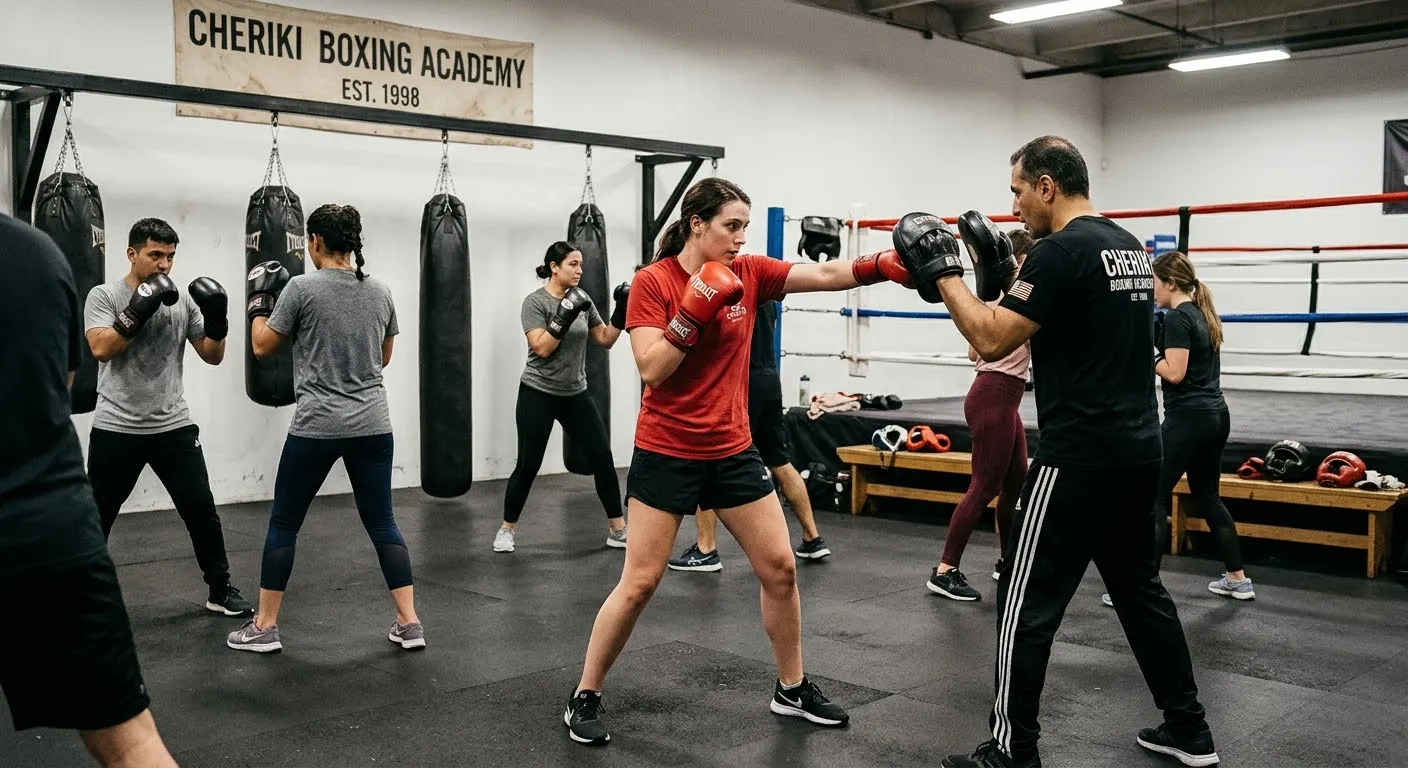
A beginner class commonly starts with a warm-up, followed by instruction in basic stance, movement, and technique. Depending on the program, you may practise shadowboxing, work on a bag, or follow a coach’s combinations using pads.
You are not expected to know the terminology or perform every movement perfectly. It may take several sessions to become comfortable with your stance, coordination, and breathing during exercise.
Wear comfortable training clothes and bring water. Ask the gym whether gloves, hand wraps, or other equipment are provided. Follow the coach’s instructions, work at a manageable pace, and speak up if you are unsure how to perform a movement.
At Cheriki Boxing Academy, adults interested in starting boxing can explore the adult boxing classes to learn more about the program. Check the current class details with the academy to confirm which sessions are suitable for your experience level.
Coach Mehran Cheriki’s Experience
Coach Mehran Cheriki has experience in striking sports and coaching, including world-level kickboxing achievements. His background provides context for understanding the technical differences between striking disciplines.
However, the right choice for a beginner depends on personal goals, experience, and the classes currently available. Ask the academy which programs are running and what each class covers instead of assuming that every discipline is offered.
You can learn more about Coach Mehran Cheriki and his background on the academy’s website.
Ultimately, choosing between boxing vs kickboxing vs muay thai comes down to your interests, goals, comfort with contact, and the quality of instruction available. Start with a beginner-friendly class, ask about the training format, and give yourself time to learn.
If you are interested in trying boxing at Cheriki Boxing Academy, you can book a free trial class to learn more about the program and decide whether it suits you.
Frequently Asked Questions
Is boxing easier to learn than kickboxing or Muay Thai?
Boxing has a more focused set of striking techniques, which may make its initial skills easier to organise for some beginners. However, all three disciplines require practice, coordination, and patience. The difficulty depends on the student and the teaching approach.
Which discipline is best for general fitness?
Boxing, kickboxing, and Muay Thai can all support cardiovascular fitness, coordination, and muscular endurance. The intensity of the class and how consistently you train matter more than the discipline’s name alone.
Do beginners have to spar?
Not necessarily. Sparring policies differ between gyms and programs. Many beginner classes focus on technique, bags, pads, and controlled drills. Ask about the gym’s policy before joining.
Can I switch disciplines later?
Yes. Skills such as balance, coordination, distance awareness, and conditioning can be useful when learning another striking discipline. However, the techniques and movement patterns differ, so you will still need to learn the new discipline’s fundamentals.
Final Thoughts: Which Should You Start With?
Boxing, kickboxing, and Muay Thai each offer a different approach to striking and movement. Boxing emphasises punches and footwork, kickboxing combines punches with kicks, and Muay Thai adds knees, elbows, and clinch techniques.

From First Class to the National Stage: The Cheriki Pathway
Every competitive boxer starts somewhere, and the journey toward becoming one of the Cheriki boxing champions begins with learning the fundamentals. For some athletes, that
Can You Start Boxing at 40? A Beginner’s Guide for Adults Over 30, 40 & 50
Many adults wonder whether it is too late to learn a new sport once they reach their thirties, forties or fifties. The question comes up
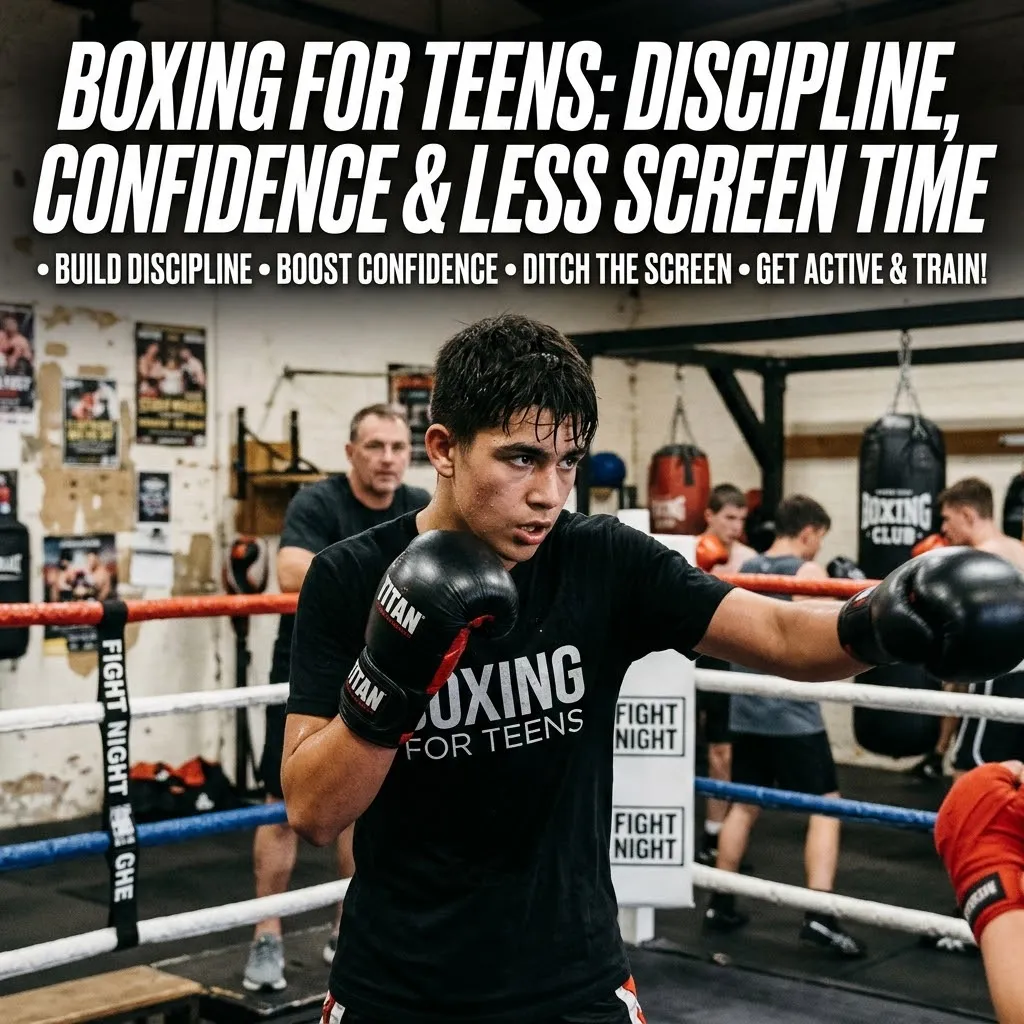
Boxing for Teens: Discipline, Confidence & Less Screen Time
Many parents notice that teenagers can struggle with focus, motivation and the constant pull of phones and screens. Structured physical activity can offer a practical